7 Green Bedroom Paint Ideas for a Calm and Refreshing Space
Green is a popular choice for bedroom paint because it brings a sense of calm and nature indoors. It works well in many styles and can create a cozy or fresh atmosphere depending on the shade used. Many people look for easy ways to choose the right green that fits their space and mood.
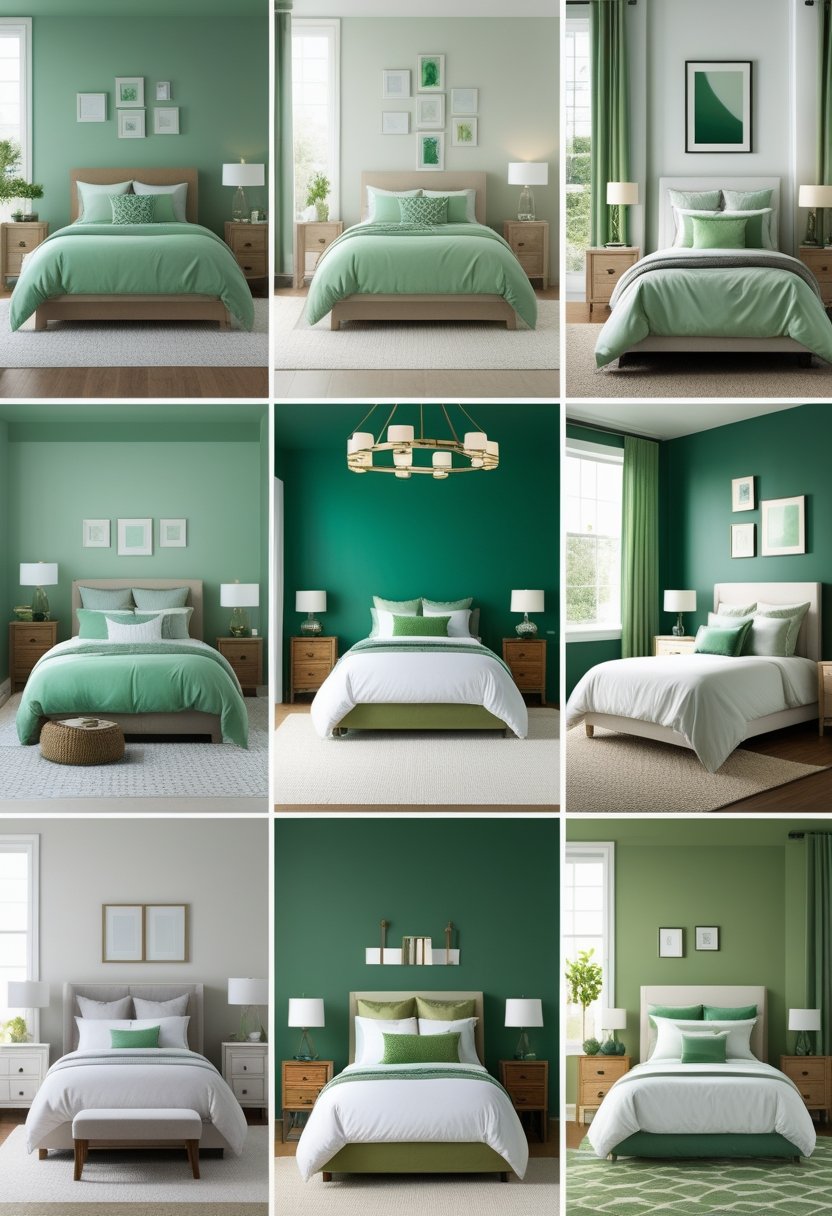
Choosing the right green paint color can transform a bedroom into a restful and inviting space. Different greens, from deep tones to soft pastels, offer versatile options for any room size or style. Understanding how these shades affect the room can help make a better decorating decision.
1) Sage green walls for a soft, calming atmosphere
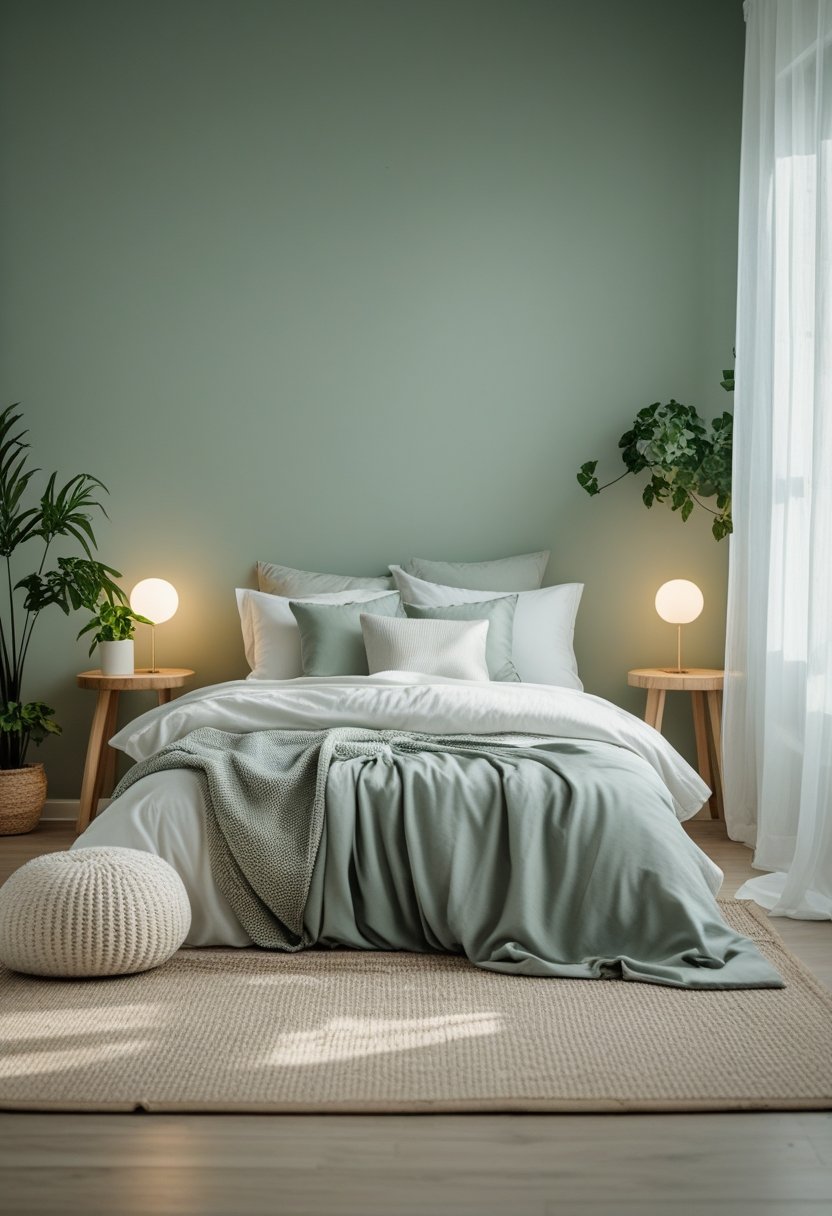
Sage green walls create a gentle, soothing feel in the bedroom. This soft color helps reduce stress and supports relaxation.
It works well with white trim and natural wood elements. The combination gives a balanced, peaceful look that fits many styles.
Adding cream or beige accents enhances the calmness. Overall, sage green is a practical choice for a restful bedroom space.
2) Deep emerald paint for a rich, luxurious feel
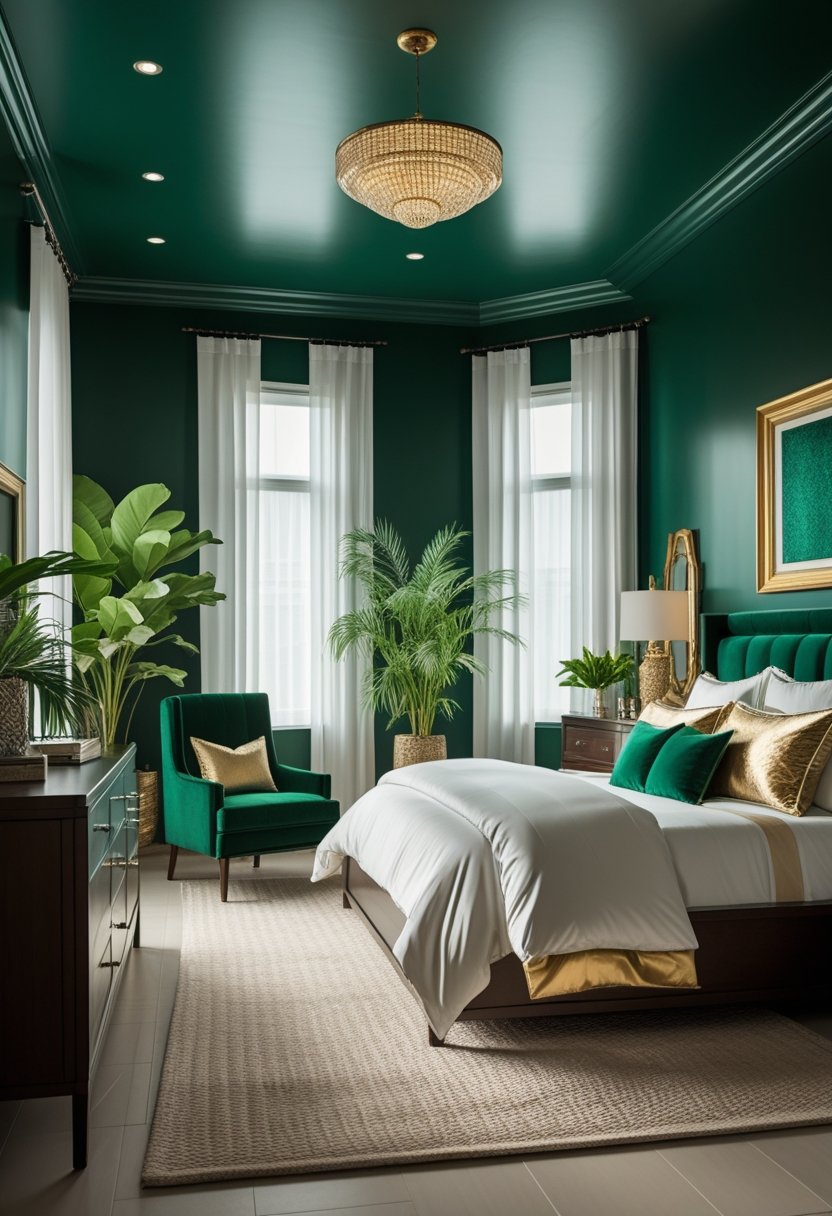
Deep emerald paint adds a sense of luxury to any bedroom. The rich green tone creates a cozy and elegant atmosphere that feels both bold and inviting.
This color pairs well with gold accents and soft lighting to enhance the room’s sophistication. It works best on walls or as an accent to highlight key areas without overwhelm.
3) Olive green paired with natural wood accents
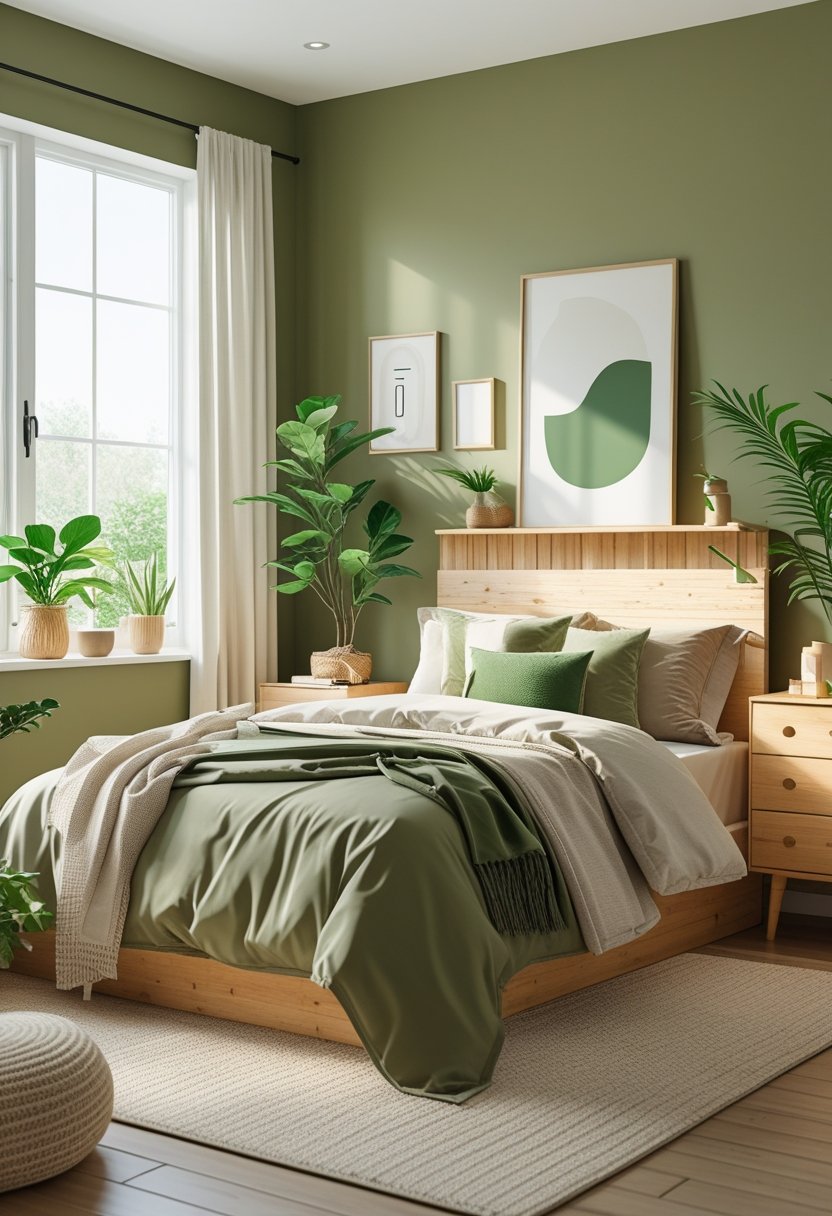
Olive green works well with natural wood tones. The earthy color of the paint highlights the warmth of wooden furniture or floors.
Using wood accents like beams, frames, or bedside tables adds texture. This combination creates a cozy and inviting atmosphere without being too bold.
The mix of olive green and wood gives the room a calm, grounded feel. It fits both modern and rustic bedroom styles easily.
4) Muted moss green for a nature-inspired look
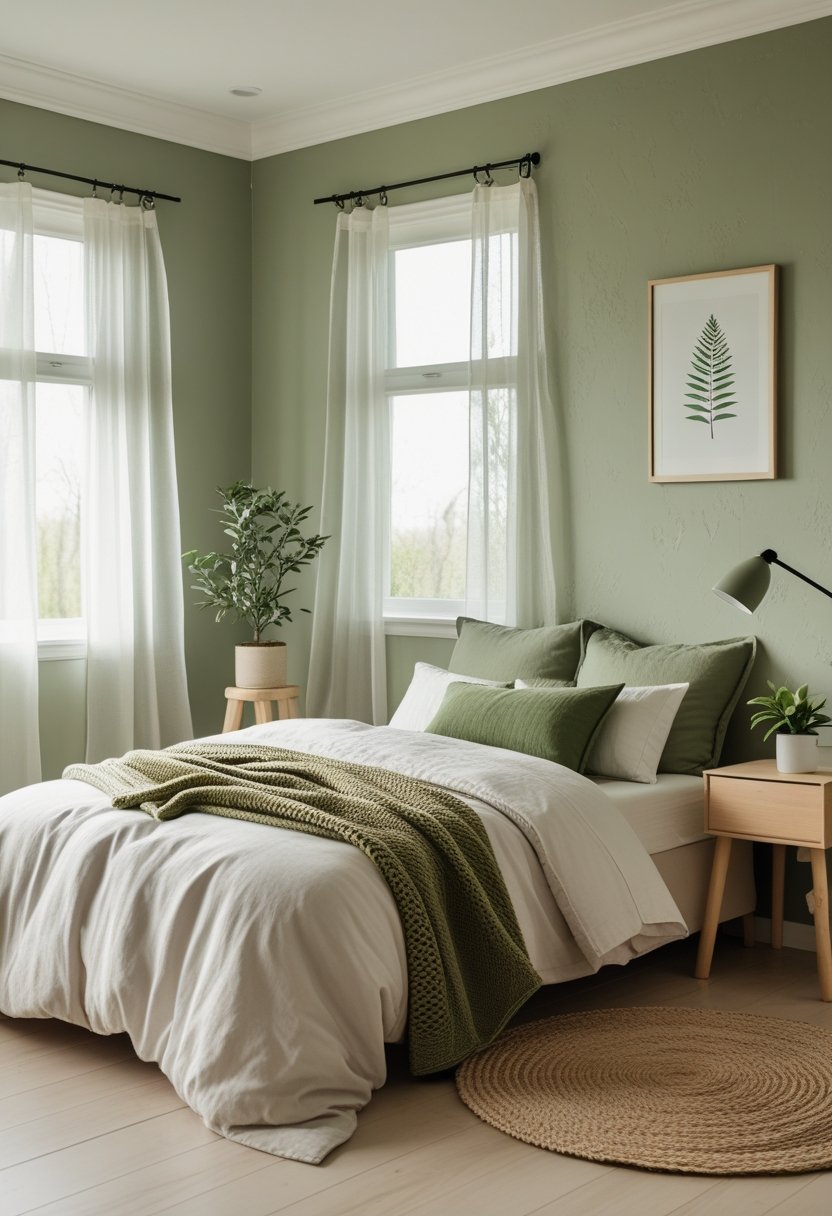
Muted moss green blends soft green with hints of brown and yellow. It offers a calm and grounded feel, making it ideal for bedrooms.
This shade reflects natural elements like forest floors and dried leaves. It pairs well with neutral tones and natural materials.
Using muted moss green creates a peaceful space. It fits well with minimalist and botanical design styles.
5) Soft mint green to brighten a small bedroom
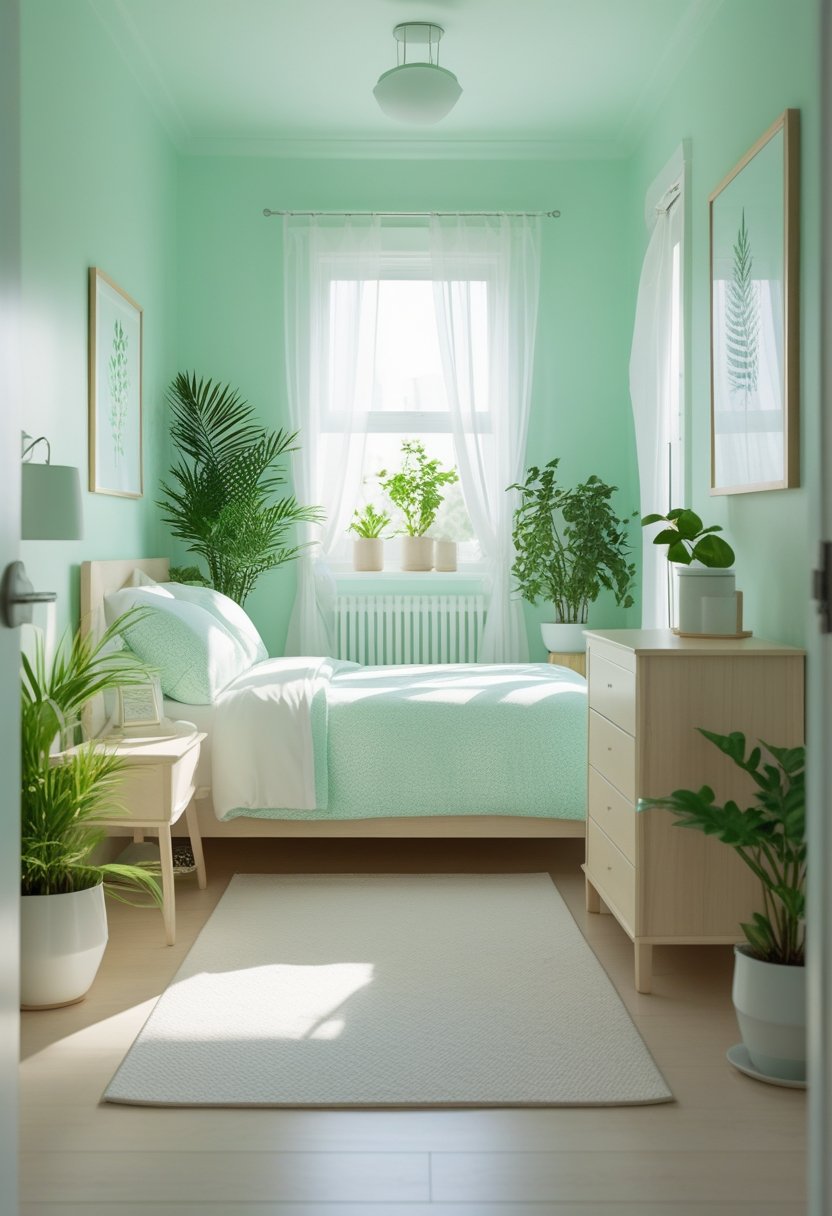
Soft mint green works well in small bedrooms. It reflects natural light, making the room feel brighter and more open.
The color adds a calm and fresh atmosphere without overwhelming the space. It pairs nicely with white or cream accents to keep the look light and airy.
Using mint green on walls or furniture helps create a soothing environment that feels clean and welcoming. It is a practical choice for anyone wanting to brighten a small room calmly.
6) Dark forest green as a dramatic accent wall
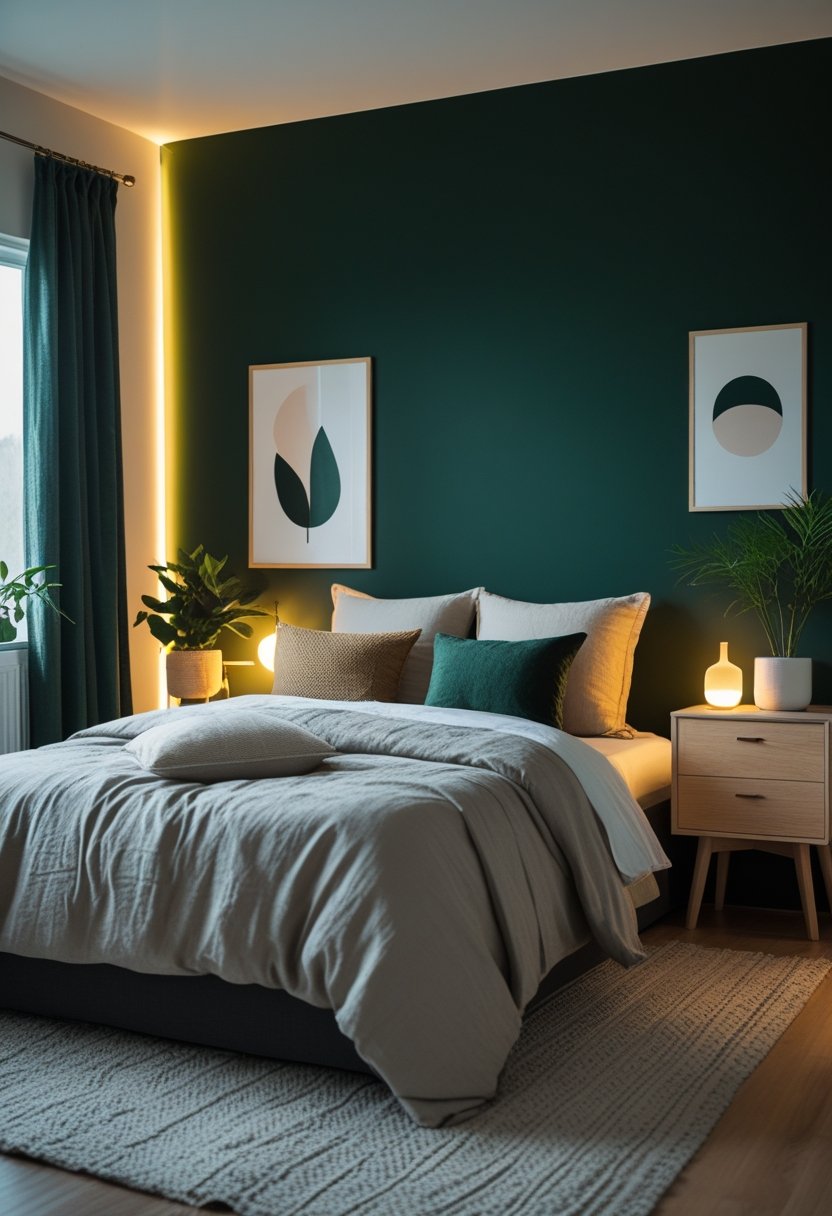
Dark forest green works well as a bold accent wall in a bedroom. It adds depth and creates a strong focal point without overwhelming the space.
This color pairs nicely with neutral tones like white or cream. It helps balance the room and highlights furniture and decor.
Using dark forest green on one wall creates a cozy, intimate feel. It brings nature indoors and enhances the room’s calm atmosphere.
7) Light pistachio green for airy, fresh vibes
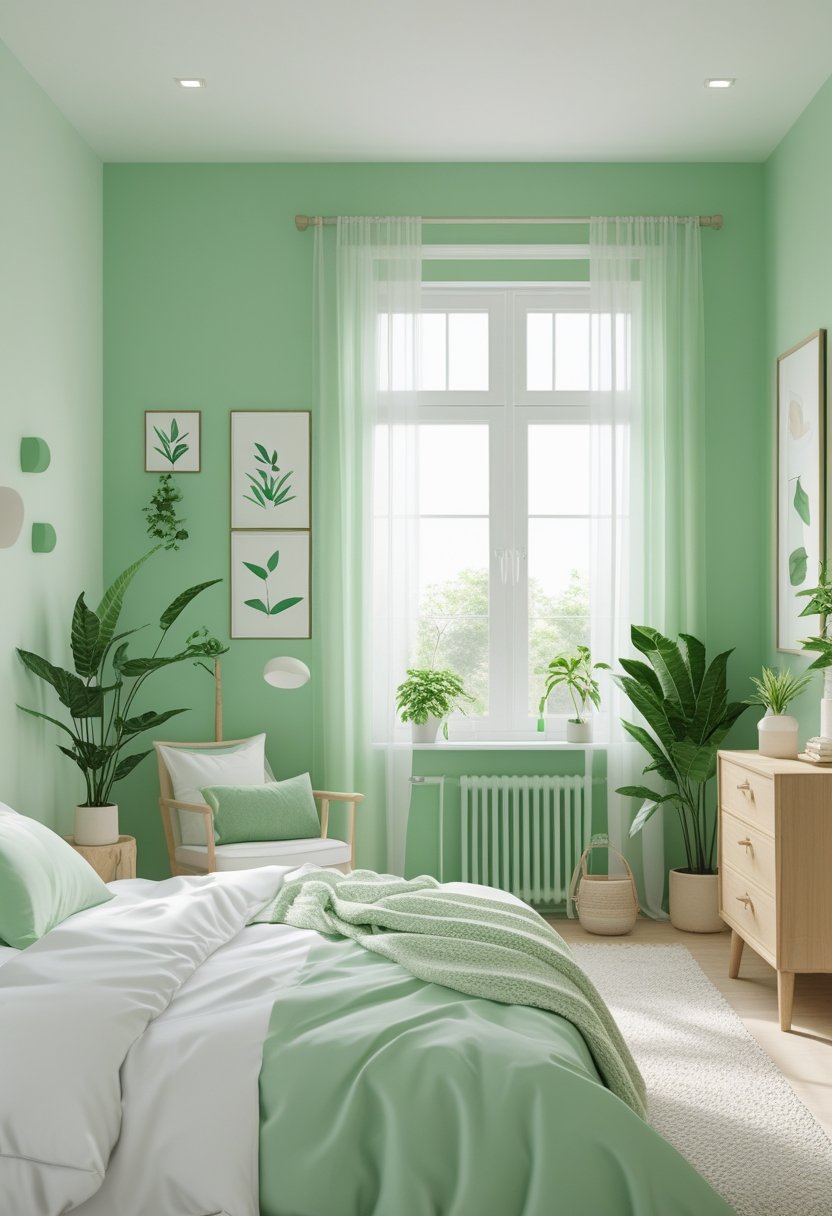
Light pistachio green works well to create a bright and open atmosphere. It adds a soft, natural touch without overwhelming the space.
This shade pairs nicely with white, cream, and light wood tones. It helps small bedrooms feel larger and more inviting.
Using pistachio green on walls or as an accent can bring freshness and calm. It suits both modern and rustic bedroom styles.
How to Choose the Right Shade of Green
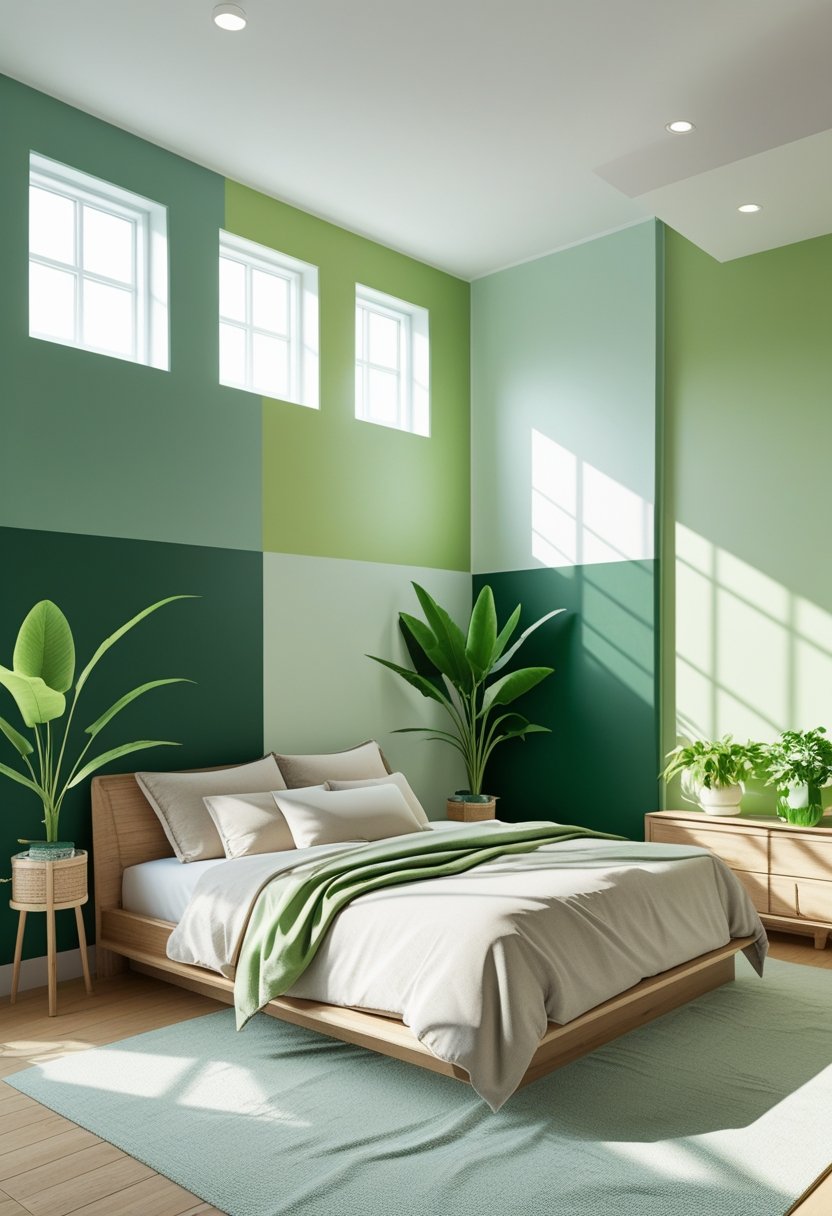
Choosing the right green paint involves understanding its base colors and matching them to the rest of the bedroom. Light, dark, warm, or cool tones all affect the room’s mood and harmony. Making smart choices about undertones and decor coordination helps avoid color clashes and creates a more balanced look.
Understanding Undertones
Every green shade has undertones that influence how it appears in a room. These can be warm (yellow or brown), cool (blue or gray), or neutral. Warm undertones create a cozy, inviting space, while cool undertones feel calm and fresh.
Lighting changes how undertones show up. Natural sunlight reveals true colors, but artificial light can make greens seem warmer or cooler. Testing paint samples on different walls at various times of day is vital.
Identifying undertones helps in pairing green with other colors and materials. For example:
- Warm greens work well with wood and beige tones
- Cool greens suit gray or white accents
This step stops green from feeling off or clashing with furniture.
Coordinating With Bedroom Decor
Green paint must complement existing or planned decor to unify the space. The color works best when balanced with bedding, furniture, and accessories.
Neutral bedding like cream or beige softens stronger greens. Contrasting textures like chunky knit throws add interest without overwhelming. Wooden furniture pairs naturally with olive or sage tones, enhancing an earthy vibe.
It helps to plan the focal points. For instance: painting one wall in a deep olive green draws attention to the bed area, while lighter greens brighten the room overall.
Matching the shade to decor style—modern, rustic, or classic—creates a cohesive feel. Green’s versatility relies on blending, not competing, with other elements.
Tips for Painting and Maintaining Green Bedroom Walls
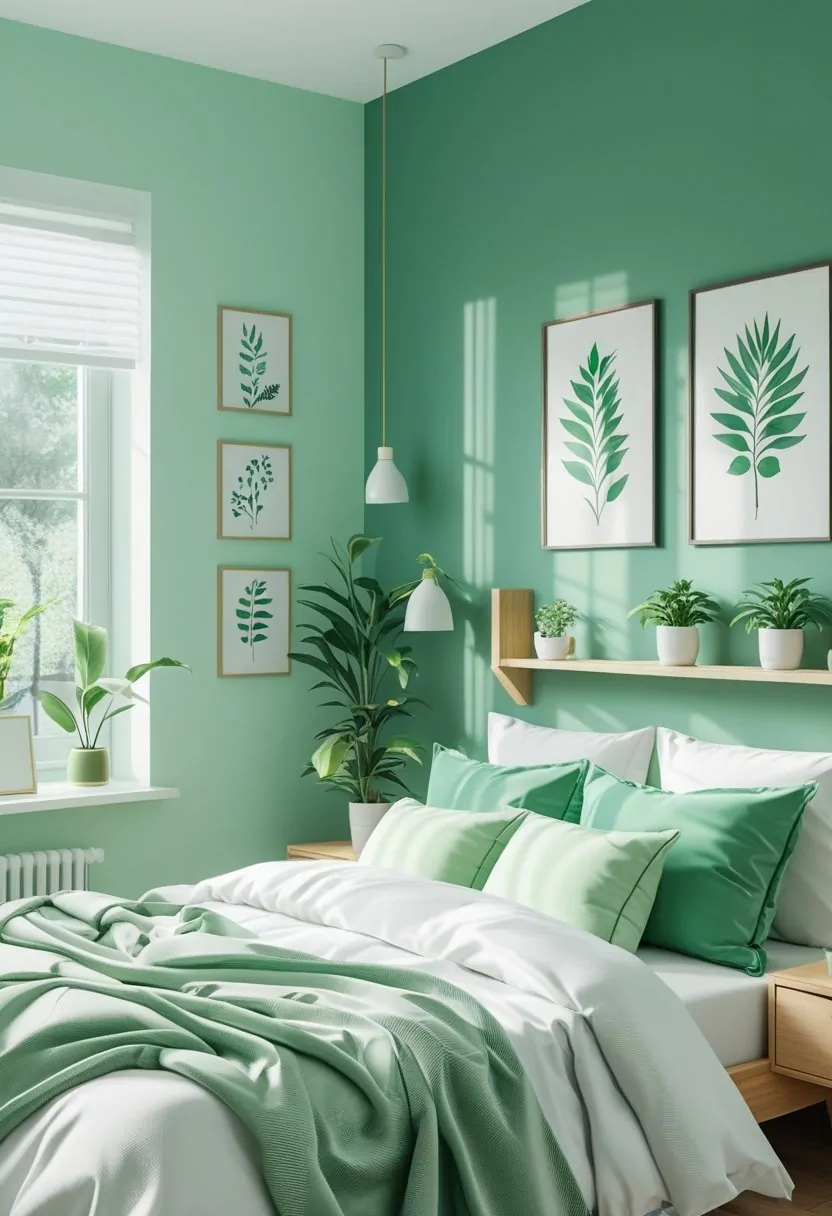
Proper steps before painting and simple care after help keep green walls looking fresh and smooth. Attention to surface prep and regular cleaning can extend the life of the paint.
Preparation and Priming
Before painting, the walls should be clean, dry, and smooth. Any holes or cracks must be filled and sanded flat.
Using a quality primer helps the green paint stick better and shows the true color. Primer is especially important if the wall was previously painted a dark or bright color.
Painter’s tape protects edges, and using the right brushes or rollers ensures even coverage. Applying two thin coats rather than one thick coat prevents drips and uneven color.
Let the primer dry fully before applying paint. Good light in the room helps spot any missed spots during painting.
Caring for Painted Surfaces
After painting, wait at least two weeks before washing the walls to allow the paint to cure.
Use a soft cloth or sponge with mild soap and warm water for cleaning. Avoid abrasive scrubbers that can damage the paint.
Touch up scuffs or chips promptly with leftover paint to keep the walls even.
Keep humidity low to prevent paint from peeling, especially in rooms with poor ventilation. A dehumidifier or fan can help maintain good air circulation.
Frequently Asked Questions
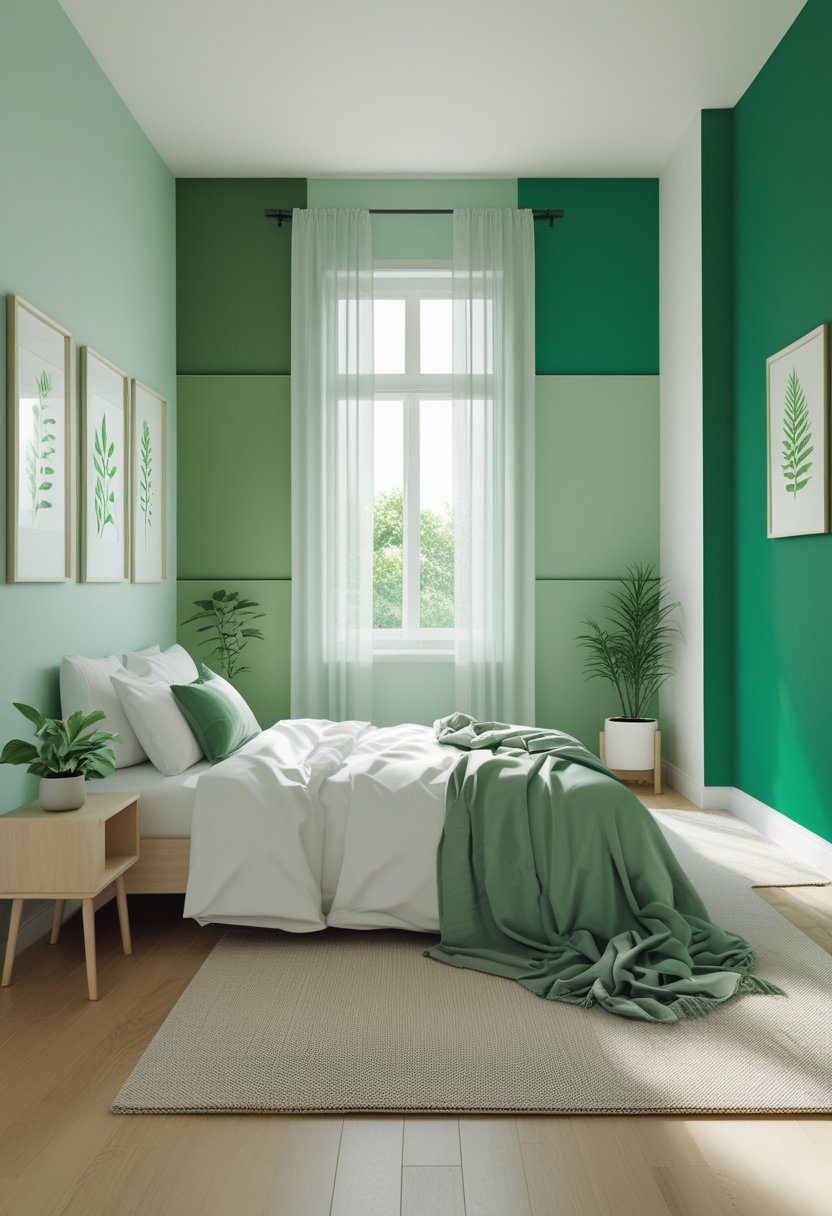
Different shades of green can change the mood and feel of a bedroom, from calm and soft to rich and bold. Using the right tones and mixing colors carefully can create harmony and style.
What are the trending modern green hues for bedroom walls?
Sage green is very popular for its soft and calming effect. Deep emerald offers a rich, elegant look that adds depth to the room.
Olive green with natural wood accents is trendy for those who want a warm, cozy feel. Muted moss green brings a nature-inspired vibe that feels grounded.
How do I incorporate light green to create a calming bedroom atmosphere?
Light green shades, such as soft mint or sage, are good choices for a peaceful bedroom. They reflect light well and keep the space feeling open and fresh.
Pair light green walls with cream or white linens to keep the room airy. Adding plants provides a natural touch that enhances calm.
Can you suggest some green colour combinations for a bedroom palette?
Green pairs well with natural wood for a warm, inviting look. Cream or soft beige accents balance the green and keep it from feeling heavy.
For a brighter palette, soft mint green works well with white or pale pink accents. Deep emerald green pairs well with black or gold for a luxurious look.